
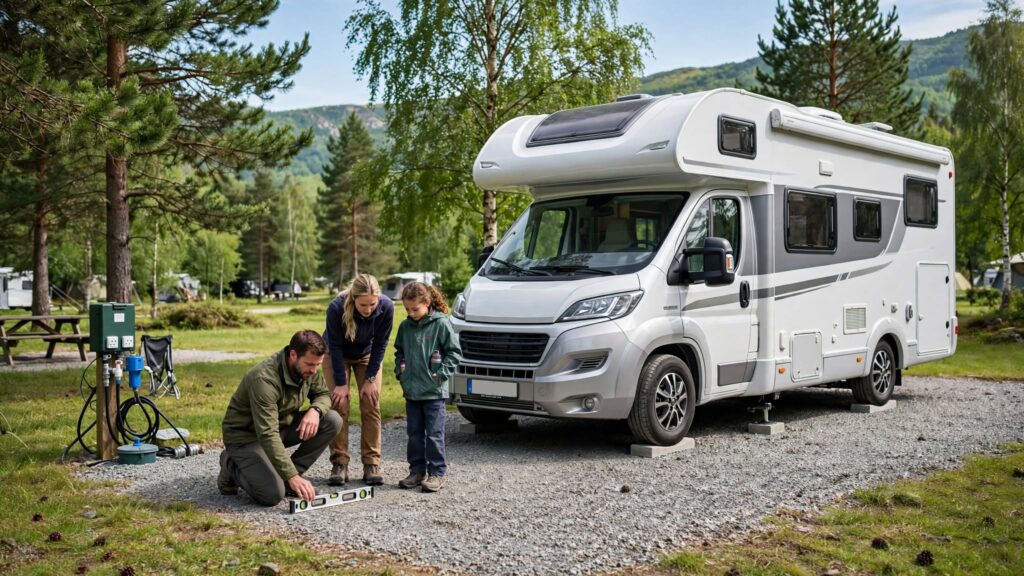
Choosing the right motorhome camping pitch can make a noticeable difference to how comfortable and convenient your trip feels. A pitch that looks perfectly suitable when booking may be less practical once you arrive with a large vehicle, outdoor furniture, electrical cables, and everything else needed for your stay.
Rather than choosing a pitch based only on price or appearance, consider how well it suits your motorhome, the length of your stay, and the way you plan to use the campsite. From ground conditions to utility connections, a few practical checks can help you avoid common problems.
Check the Pitch Size Before Booking
Motorhomes vary considerably in length and width, so pitch dimensions should be one of your first considerations. Your vehicle needs enough room to park safely without extending into access roads or neighbouring pitches.
Remember that the motorhome itself is not the only thing taking up space. You may also want room for an awning, table, chairs, bicycles, or other camping equipment. If you are travelling with children, some additional outdoor space can also make the pitch more comfortable.
Check whether the campsite gives actual pitch dimensions or simply describes pitches as small, standard, or large. If the dimensions are unclear, confirming them before arrival can prevent an awkward parking situation.
Consider the Ground Surface
The surface beneath your motorhome affects stability, cleanliness, and accessibility.
Hardstanding Pitches
A hardstanding motorhome pitch normally uses gravel, compacted stone, or another firm material. It can be particularly practical during wet conditions because the vehicle is less likely to sink into soft ground or leave deep tyre marks.
Hardstanding can also provide a stable surface for heavier motorhomes. However, it may feel less comfortable if you want to spend a lot of time sitting directly outside your vehicle.
Grass Pitches
Grass creates a more traditional camping atmosphere and may provide a softer outdoor area for relaxing. It can work well when the ground is dry and firm.
The main limitation is weather. Prolonged rain can make some grass pitches muddy or difficult to drive across, especially with a heavier vehicle. When considering a grass pitch, check whether the campsite has suitable access routes and whether the ground is likely to remain usable in poor weather.
Look at the Pitch Gradient
A motorhome works more comfortably when it is reasonably level. Even a modest slope can affect sleeping comfort and may cause items inside the vehicle to sit unevenly.
Levelling ramps can compensate for some uneven ground, but choosing a relatively flat pitch makes setup easier. Photographs can help, although they do not always show the gradient clearly.
The surrounding ground matters too. A low-lying pitch may collect water after heavy rain, while very uneven terrain can make walking around the vehicle less convenient.
Check Electrical and Water Access
If you want an electric hook-up, find out whether it is included with the pitch and where the connection point is located. A connection that is farther away than expected could require a longer suitable cable.
Water access is another consideration. Some pitches have convenient nearby water points, while others require campers to walk to a shared facility. For a short stay, that difference may be minor. For a longer trip, easier access can save repeated journeys around the campsite.
Also check the arrangements for wastewater and toilet disposal. A fully serviced pitch may provide some connections directly, while other campsites use communal service points.
Think About Your Position Within the Campsite
Two pitches at the same campsite can provide very different experiences simply because of their location.
A pitch near toilets, showers, reception, or washing facilities can be convenient, particularly if you expect to use them regularly. However, these areas may also have more people walking past throughout the day.
A pitch farther from busy facilities may offer a quieter setting, but you will have a longer walk when you need them. Families may prefer easy access to play areas, while travellers looking for a peaceful break might choose a pitch away from central activity.
Camping gives families a chance to spend more time outdoors and share everyday experiences away from their normal routines, which is one reason Why Camping Is One of the Best Family Vacations is worth considering when planning this type of trip. The right pitch supports that experience by matching the needs of everyone travelling with you.
Consider Shade, Sunlight, and Shelter
Think about how the pitch is positioned throughout the day. A sunny location may be pleasant during cooler weather, while some shade can make outdoor seating more comfortable during warmer periods.
Trees and hedges can provide useful shelter and privacy, but they also have practical drawbacks. Low branches may be unsuitable for taller motorhomes, and dense tree cover can limit sunlight around the pitch.
Natural shelter can also reduce exposure to wind. If you plan to use an awning, chairs, or an outdoor cooking area, a very exposed pitch may be less convenient in breezy conditions.
Make Sure Access Is Suitable for Your Motorhome
The pitch itself might be spacious, but getting to it can be another matter. Narrow campsite roads, tight corners, overhanging branches, steep approaches, or closely positioned obstacles can make manoeuvring a larger motorhome difficult.
Check any vehicle length, height, or weight restrictions before booking. If you are driving a particularly large motorhome, ask whether the campsite has pitches specifically suited to bigger vehicles.
Consider your departure as well. A pitch that requires complicated reversing or turning may become inconvenient when the campsite is busy.
Check the Campsite Rules That Affect Your Pitch
Individual campsites may have rules covering awnings, barbecues, generators, pets, additional vehicles, and quiet hours. These can affect how you use your pitch, even if the physical space itself is suitable.
For example, a large pitch offers little benefit if campsite rules do not allow the awning or extra vehicle you intended to bring. Reading the pitch conditions before booking helps ensure that your plans match what is permitted.
Choosing a Pitch That Fits Your Trip
A suitable motorhome camping pitch is not necessarily the largest or closest to the facilities. It is the one that works with your vehicle, equipment, travel group, and preferred camping style.
Check the dimensions, surface, gradient, utility access, campsite position, shelter, and vehicle access before confirming your booking. Paying attention to these details can make arrival easier and help you spend less time solving practical problems once your motorhome is parked.