
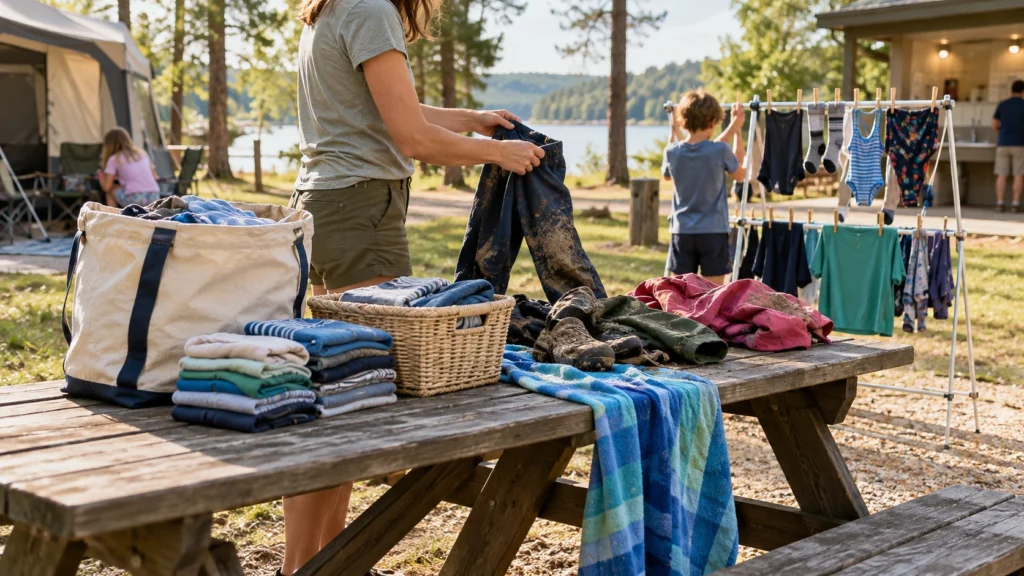
Family camping has a way of producing laundry faster than expected. A beach towel gets damp, a child changes after a muddy walk, and the clothes set aside for tomorrow are suddenly needed today. A simple routine for managing laundry during family camping keeps these small problems from taking over the trip. The aim is to know what is clean, what needs attention, and when a wash is worth doing.
Pack for the routine you plan to use
Start with enough clothing for ordinary days, then think about the items your family is most likely to use twice in one day. Socks, underwear, swimwear, and children’s spare outfits usually deserve more space than extra outfits for adults. If you expect to use campsite laundry facilities during a longer stay, you can pack around a planned wash rather than trying to bring everything for the whole trip.
Keep the laundry kit small and easy to reach. A breathable bag or basket for dirty clothes, a separate waterproof bag for unexpectedly wet items, and a compact supply of the detergent you normally use will cover most situations. Check any campsite instructions before packing detergent, since machine requirements and shared facility rules can vary. If your family has sensitive skin, bringing a familiar product may be simpler than finding a suitable one during the trip.
Separate clean clothes by person or type when packing. That makes it easier to find a dry shirt without emptying a suitcase onto the tent floor. It also gives children a clear place to return unused clothes, so they do not end up mixed with the dirty pile.
Make sorting a daily habit
Choose one place for dirty laundry as soon as you set up camp. A bag left by the sleeping area may be convenient, but it can also collect damp clothes that need air. Ask everyone to put ordinary worn items in the laundry bag and tell an adult about anything wet or heavily soiled.
At the end of each day, take a minute to check pockets and sort the pile. Set aside towels and swimwear to dry, and keep muddy or sandy items away from cleaner clothing. Shake loose sand off outside before it reaches the bag or a washing machine. For a tent stay, a closed bag can help contain clutter, but avoid sealing damp items in it for days.
There is no need to wash every item after one use. A lightly worn outer layer may be suitable to wear again once it has aired out. Underwear, socks, and visibly dirty clothes are better treated as laundry. Follow the care labels, especially for children’s outdoor layers or swimwear that may need gentler treatment.
Pick a wash time that fits the trip
For a stay of several days, choose a likely laundry window before clean essentials run short. A quieter period at camp often works better than trying to wash everything between an outing and dinner. Check where the machines are, how guests access the facility, and whether there are any posted instructions.
Keep loads manageable. Combining every towel, pair of jeans, and small garment into one overfilled machine can make washing and drying less effective. Sort by care label and colour where needed, and allow enough time for clothes to dry fully before packing them away. Shared machines may be in use when you arrive, so leave some flexibility in the day rather than depending on a particular wash finishing at a particular moment.
For example, imagine the family returns from the beach with damp towels and two children’s sandy outfits. Hang the towels where they can dry, shake out the sand, and wash the clothes with the next suitable load. This avoids using a full machine cycle for a few items while keeping the damp pile under control. If those outfits are needed the next morning, washing them sooner becomes the practical choice.
Dry clothes before they disappear into bags
Drying deserves as much attention as washing. Even freshly laundered clothes can develop an unpleasant smell if they are folded while still damp. Use a tumble dryer only when the garment care label permits it, and check thicker items before putting them away. Waistbands, pockets, and towel edges can stay damp after lighter items feel dry.
When air drying is appropriate, use a permitted space and keep clothing clear of walkways and shared areas. Weather can change quickly, so have a place to move items if rain starts. In a cabin or tent, avoid crowding wet clothes into a small enclosed space; they may dry slowly and leave the sleeping area feeling damp. If drying space is limited, wash smaller loads more often rather than creating a large backlog.
A small hand wash can help when one item cannot wait for the next machine load. Rinse and dry it according to its care label, and make sure you have somewhere suitable for it to dry. Hand washing a few socks may be manageable; washing several heavy towels this way is likely to create more work than it saves.
For more detailed information on this topic, read our guide on What to Look for When Choosing a Motorhome Camping Pitch.
Reset before the journey home
On the last evening, check the laundry bag before packing. Put fully dry, unworn clothes back with the clean items, and keep dirty or damp pieces separate for the journey. If you cannot dry something completely, avoid burying it among clean clothes and deal with it promptly when you get home.
The routine can stay simple: give dirty clothes one place, separate damp items, sort briefly each day, and wash when the family is running low on essentials. That leaves less time spent searching through bags and more room in the day for the parts of camping you came to enjoy.