
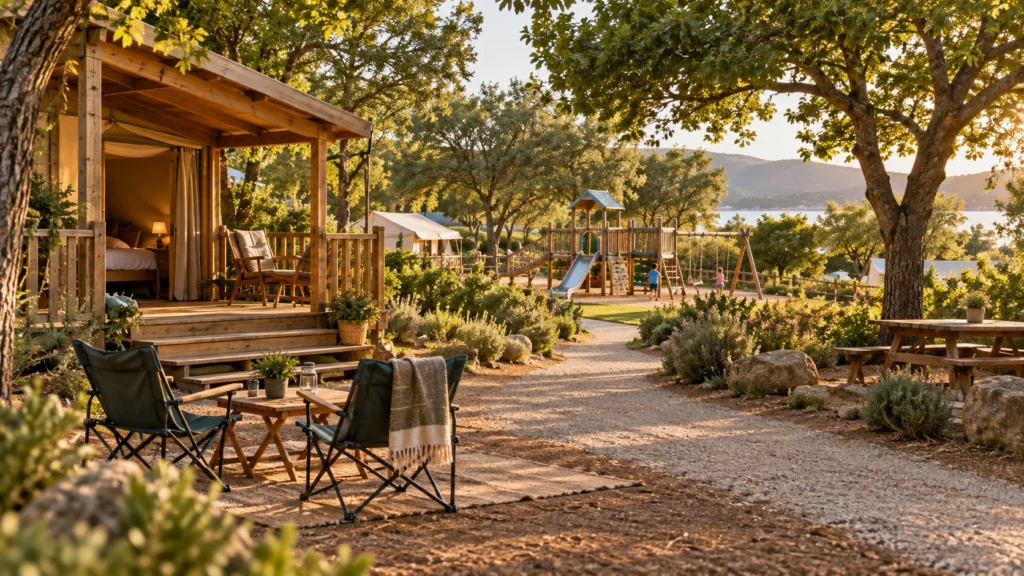
Family camping works best when children have room to play, and everyone has a way to slow down. A playground can give the day a welcome focus, but its convenience depends on where you stay, when your family needs rest, and how easily you can move between the two. Planning around playground access and quiet time helps you avoid a common holiday frustration: choosing a spot that looks ideal for play but makes naps or evenings difficult.
Choose a pitch or cabin with the whole day in mind
Being close to a playground is useful when children want to make several short visits. It can also mean more passing foot traffic and play noise. A quieter location may suit a child who naps during the day, while a family with older children might prefer an easier walk to the activity area.
Before booking, look at the campsite map and ask about the walking route, rather than judging by distance alone. Consider whether children would need to cross a road or busy vehicle area, and whether an adult can comfortably carry supplies back to your accommodation. If you cannot select an exact pitch, treat a preferred location as a request and plan for some flexibility.
At the campsite, families can choose camping or cabin accommodation, and playground activities are available on site. The campsite also notes that specific camping pitch numbers cannot be guaranteed. That makes it sensible to ask about your priorities while recognizing that your eventual spot may differ from the one you pictured.
Build quiet time into the day before everyone needs it
Quiet time does not have to mean that every child sleeps. It may be a nap, reading in the cabin, drawing at a picnic table, or simply taking a break from a busy play area. The useful part is giving children a familiar pause before tiredness makes the next activity harder.
Think about when your child usually runs out of energy, then work backwards. If lunch tends to be followed by a rest at home, keep that part of the camping day light too. A long outing in the morning and a playground visit late in the afternoon may be easier than trying to fit both into the middle of the day.
For example, a family planning a trip to a local attraction could keep the following morning open for unhurried play and rest at the campsite. The campsite is near the attraction, but a short journey does not necessarily make a full day out less tiring for young children. Leaving space in the schedule gives the family options if everyone comes back ready for a quieter pace.
Make playground visits easy to start and stop
Playground access is most helpful when leaving is as manageable as arriving. Agree on a simple plan before children begin playing: how long you expect to stay, where you will meet if someone steps away, and what comes next. For younger children, saying “we’ll go back for a snack after this” may be clearer than announcing an abstract time limit.
Carry the essentials for a short visit so you do not have to end it over a minor need. Depending on the weather and your children’s ages, that might mean water, a layer of clothing, and something for a quick clean-up. Keep the rest of your gear at your pitch or cabin. A lighter bag makes it easier to leave when a child needs a break.
If siblings have different energy levels, avoid making the whole family follow one child’s schedule. One adult might stay with an older child at the playground while another takes a younger child back to rest. When that is not practical, choose a shorter visit and save a second round of play for later.
Protect the quieter parts of your stay
A calm return starts with how you set up your accommodation. Keep sleeping items, books, and evening supplies easy to reach, especially if you expect to come back with tired children. In a tent or caravan, a small amount of preparation can spare you from searching through bags while everyone is trying to settle.
Pay attention to what is happening around your pitch, too. Shared campsites have other guests, changing activity levels, and periods when people are arriving or moving about. A location away from the playground may help with noise, but it will not make every part of the day silent. If your family needs a particularly quiet rest period, consider whether a cabin better fits that routine.
It also helps to separate quiet time from bedtime. A child who is too excited to sleep after an evening of play may still benefit from a slower activity and a predictable sequence: wash up, change clothes, read, then settle down. Following the campsite’s rules and keeping your own group’s noise considerate makes evenings more comfortable for nearby families as well.
For more detailed information on this topic, read our guide on A Simple Routine for Managing Laundry During Family Camping.
Leave room for weather and changing moods
An outdoor play plan depends on the day you actually get. Rain, heat, or a child who simply wants less stimulation may change how long a playground visit feels enjoyable. Have a low-effort alternative ready, such as a book, a simple game, or a walk, so the day does not depend on one activity.
At a campsite with several options, you can vary the pace without filling every hour. The campsite lists a beach and walking trails alongside its playground activities. Those give families choices, although conditions and each child’s energy still determine what feels suitable on a given day.
The most useful plan is a flexible rhythm: choose accommodation with a practical route to play, identify a likely rest window, and leave enough space to change course. Children can enjoy the playground more when they are not exhausted, and the whole family can enjoy the quieter hours without feeling that they have missed out.